x
RT-PCR Banner

RT-PCR

DTI offers a broad portfolio of reverse transcriptase enzymes and cDNA synthesis kits that can be used for a variety of applications, including first-strand synthesis, real-time PCR, and cDNA library construction.

Takara Bio Range
DTI Brand India Manufactured Range

Upgrade Your RT-PCR Skills

What is RT-PCR?

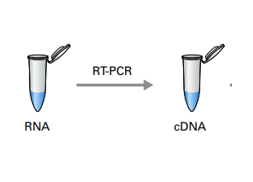
RT-PCR stands for Reverse Transcription Polymerase Chain Reaction. It’s a laboratory technique used to detect and measure RNA.

The process involves two main steps:

  1. Reverse Transcription (RT): RNA is converted into complementary DNA (cDNA) by an enzyme called reverse transcriptase.
  2. Polymerase Chain Reaction (PCR): The cDNA produced from the reverse transcription step is subsequently amplified using PCR.
One-Step vs. Two-Step RT-PCR: Choosing the Right Method

In RT-PCR, there are two main approaches: one-step and two-step. Each has its advantages depending on the experiment’s goals, RNA quality, and sample quantity.

One-Step RT-PCR: In a one-step RT-PCR, both reverse transcription (cDNA synthesis) and PCR amplification are performed in the same tube without transferring materials.

Advantages
  • Simplicity: Fewer handling steps reduce contamination risks and save time.
  • Speed: Fast and convenient, especially for high-throughput or diagnostic applications.
  • Consistency: All reagents are in one tube, minimizing variability between samples.

Two-Step RT-PCR: In a two-step RT-PCR, reverse transcription and PCR amplification are conducted separately. cDNA is synthesized first and can be stored or used for multiple PCR reactions.

Advantages:
  • Flexibility: Use the same cDNA for multiple targets, ideal for studies with multiple genes.
  • Sensitivity: Often more sensitive for low-abundance targets, as different primers can be used in each PCR reaction.
  • Storage and Reuse: cDNA can be stored and reused, beneficial when sample availability is limited.
Which should you choose?
Principle:

The principle of RT-PCR involves two main steps:

Reverse Transcription:
  1. RNA Conversion: RNA is converted into complementary DNA (cDNA) using reverse transcriptase.
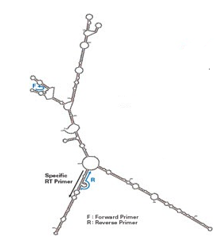
  2. Primer Binding: A primer binds to a specific sequence on the RNA, providing a starting point for cDNA synthesis.
  3. cDNA Synthesis: Reverse transcriptase adds nucleotides to the growing cDNA strand, complementary to the RNA template.
Polymerase Chain Reaction (PCR)
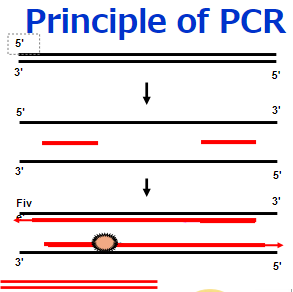
  • Exponential Amplification: Amplifies the cDNA using repeated cycles of denaturation, annealing, and extension.
  • Denaturation: The cDNA is heated to separate the double helix.
  • Annealing: Primers bind to specific sequences on the cDNA.
  • Extension: DNA polymerase adds nucleotides to the primers, extending the cDNA strands.
 
Common Hurdles & How to Avoid Them?
Common Hurdles:
  • Low cDNA yield
  • Incomplete cDNA synthesis
  • High background noise
  • Inconsistent results
  • Low sensitivity
  • Inhibitors in the sample
  • Non-specific priming
  • Temperature sensitivity
 
How to Avoid Hurdles:
  • Use high-quality RNA.
  • Choose the right reverse transcriptase.
  • Optimize reaction conditions.
  • Check cDNA quality.
  • Use a suitable RNA input amount.
  • Purify RNA before use.
  • Use appropriate primers.
  • Consider using a kit.
  • Store reagents correctly.
  • Use a positive control.
 
Commonly Used Reverse Transcriptase Enzymes
Reverse transcriptase enzymes are commonly derived from:
  • HIV-1: Human immunodeficiency virus type 1.
  • M-MLV: Moloney murine leukemia virus.
  • AMV: Avian myeloblastosis virus.
  • TERT: Telomerase reverse transcriptase.
 
Key Differences Between M-MLV and AMV Reverse Transcriptase
  • RNase H activity: M-MLV has a higher RNase H activity than AMV, essential for removing RNA from the RNA-DNA hybrid.
  • Temperature sensitivity: M-MLV is more temperature-sensitive than AMV and may be less active at higher temperatures.
  • Specificity: AMV is often considered more specific for certain RNA templates, while M-MLV may tolerate RNA secondary structures better.
 
Key Features of Reverse Transcriptase
  • DNA Polymerase Activity: Synthesizes DNA strands using RNA as a template (5′ to 3′ direction).
  • RNase H Activity: Degrades the RNA strand from the RNA-DNA hybrid.
  • Thermostability: Can withstand high temperatures, which is essential for PCR applications.
  • Processivity: Highly processive enzymes can efficiently synthesize long DNA strands.
  • Fidelity: Generally accurate, though errors may occur.
  • Terminal Transferase Activity: Enables the addition of nucleotides to the 3′ end of a DNA strand without a template.

PCR Principles
How do you decide between one-step and two-step RT-qPCR?
One-Step RT-qPCR
  • Uses gene-specific primers for reverse transcription and allows highly sensitive detection of a specific gene.
  • Allows for the preparation of total cDNA by reverse transcription using universal primers that recognize all mRNA molecules, such as random hexamers or oligo-dT primers. The resulting cDNA can be used for the detection of a variety of transcripts.
When there is an overabundance of total RNA in the reaction:
  • Can provide highly efficient amplification even in the presence of large amounts of total RNA.
  • Using random 6-mers for reverse transcription may result in poor reaction efficiency due to insufficient primer availability.

In this situation, we recommend using oligo-dT primers for two-step RT-qPCR rather than random 6-mers. The use of oligo-dT primers may improve efficiency and provide similar results as compared to one-step RT-qPCR.

Procedure strengths:
  • Analyzing a single gene.
  • Analyzing the expression of a large number of genes.

For high-throughput analyses of many samples or precise detection of rare transcripts, a one-step RT-qPCR protocol is recommended. An additional advantage of one-step RT-PCR is the existence of single-tube workflows, avoiding the need to add additional reagents halfway through the procedure and thus lowering the risk of contamination.

Which is better starting sample for preparing RT-qPCR calibration curves, RNA of cDNA?

Calibration curves for RT-qPCR may be prepared by either of the following methods:

  1. Serial dilution of RNA, followed by reverse transcription and real-time PCR
  2. Serial dilution of cDNA (obtained by reverse transcription reaction), followed by real-time PCR

Since the two methods evaluate different parameters, it is important to choose a method appropriate for the experimental system being used. Calibration curves prepared from diluted RNA samples reflect differences in not only PCR amplification efficiency, but also differences in reverse transcription efficiency, which is dependent on the amount of RNA. PCR amplification efficiencies determined from such calibration curves may potentially differ from the actual efficiency.

For Absolute Quantification, the reverse transcription efficiency is critical. Therefore, use serially diluted RNA to prepare calibration curves (cDNA dilution is unsuitable).

For Relative Quantification, differences in reverse transcription efficiency can be corrected by assaying a reference gene, such as a housekeeping gene. The use of serially diluted cDNA is recommended for preparing calibration curves.

How can amplification of genomic DNA in total RNA samples be avoided?

To avoid amplification of genomic DNA in total RNA samples:

  • Design primers that avoid genomic amplification: select a large intron region and design forward and reverse primers in exons upstream and downstream of the intron. With this strategy, genomic amplifications cannot occur for large introns. When introns are small, genomic amplification can be differentiated based on differences in melting temperature as the result of different amplification sizes (melt curve).
  • For genes that lack introns or when the genomic structure is unknown, treat the total RNA with DNase I to remove genomic DNA.

Target gene expression levels are often normalized to the expression of a “housekeeping gene” (reference gene) to correct for differences in the amount of input RNA and variations in reaction efficiency. How do I select a suitable housekeeping gene?

There is no single, universally appropriate housekeeping gene suitable for accurate normalization in every experimental condition, as it is important to select housekeeping genes that do not vary in expression levels in the experimental system used. Common housekeeping genes that have been used in the past include GAPDH and β-actin; however, reports in recent years indicate that expression of these genes may also vary, depending on the sample type and/or experimental conditions.

Using multiple housekeeping genes for normalization is currently the most reliable approach. In this strategy, the expression of multiple housekeeping genes is assayed, and the genes that show the lowest level of variation are selected for use. Software has been developed for selecting the optimum genes for correction (e.g., geNorm and BestKeeper). Inferences may also be made from microarray or RNA-seq expression profiling data, if available.

Suitable standard samples are those that approximate the actual sample as closely as possible. For gene expression analysis studies, use cDNA prepared from samples collected under conditions in which the target gene is known to be expressed. For genomic analysis studies, use genomic DNA.

Artificial standard samples (e.g., plasmid DNA) are not recommended. Even when the sequence of the amplicon is identical, any substantial difference in the template composition may result in variable PCR amplification efficiencies (e.g., genomic DNA vs. plasmid DNA).

What method(s) should be used for analyzing qPCR amplification products?

When using a validated primer, previous melt curve analysis (Tm values) can serve as a reference. If the Tm value is the same as observed in the past, it is reasonable to assume that the PCR product is the same as that obtained in the past.

Keep in mind, however, that although identical PCR products will show the same Tm value, obtaining identical Tm values alone does not necessarily confirm that the PCR products are identical. An independent confirmation method should be used; when using a primer for the first time, please perform electrophoresis to confirm that the amplification product of the real-time PCR is the intended size.

What is the appropriate number of replicates (n)?

The necessary number of sample replicates (n) varies depending on the experimental system. In principle, when the experimental error is expected to be relatively large, use a larger number of samples:

  • When profiling gene expression by RT-qPCR, it is useful to prepare multiple biological replicates and perform multiple RNA extractions in order to ascertain the degree of biological variability.
  • With respect to qPCR, greater variability is expected when using a low level of template because the number of cycles required for detection will be high. In such cases, use a larger number of replicates.
What is the sensitivity of qPCR?

The sensitivity of qPCR varies depending on experimental conditions such as the reagents and primers used. Appropriately designed systems have demonstrated the ability to detect as few as ~10 copies of template.

I understand that there are two ways to determine the Ct value. What are they?

The Ct value can be determined by two different methods:

  1. The crossing point method defines the Ct value as the crossing point between the amplification curve and the threshold line.
  2. The second derivative maximum method defines the Ct value as the point of the maximum of the second derivative of the amplification curve (second differential curve). The latter method allows highly precise analyses, since the Ct value is fixed by setting a threshold and is not subject to the effect of instrument-specific detection variability.

Please note that some instrument systems do not allow one to choose between the crossing point method and the second derivative maximum method.

What are the differences between absolute and relative quantification?
  • Absolute quantification determines the absolute number (i.e., number of copies) of a target using a standard sample that has a known number of copies.
  • Relative quantification allows a relative comparison between samples. Typically, using relative quantification, a target gene to be quantified and a reference gene (e.g., a housekeeping gene) are simultaneously assayed for the purpose of correction (normalization). Relative quantification provides the difference in expression level in the unknown sample compared with the control sample.