x

DTI One Step FabScript RT-qPCR Premix

DTI One Step FabScript RT-qPCR Premix is a 2X reagent for one-step, probe-based RT-qPCR, which does not freeze at –20℃. It combines reverse transcription and qPCR in a single tube, using a heat-tolerant Reverse Transcriptase for efficient cDNA synthesis from complex RNA. Highly resistant to inhibitors in blood and soil, it’s ideal for gene expression analysis and RNA virus detection.

Brand Catalogue Number Pack Size
DTI One Step FabScript RT-qPCR Premix
DT0701.200
200 rxn
DTI One Step FabScript RT-qPCR Premix

Product Description: DTI One Step FabScript RT-qPCR Premix is a ready-to-use reagent mix for fast and easy one-step RT-qPCR in a single tube using probe-based detection. It provides efficient and specific cDNA synthesis and amplification from a variety of RNA templates.

Features:

Fast, easy one-step RT-qPCR in a single tube: Ideal for probe-based detection.

Efficient, specific cDNA synthesis and amplification: Works effectively even with complex RNA templates.

Suitable for a wide variety of samples: Including crude RNA extracts from different sources.

DTI One Step FabScript RT-qPCR Premix - Protocol and Downloads
Document Download Link
DTI One Step FabScript RT-qPCR Premix – Protocol
DTI One Step FabScript RT-qPCR Premix – Certificate of Analysis
Multiplex Assay

Application Data 1

Objective

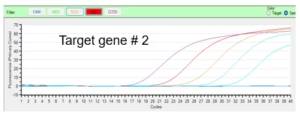
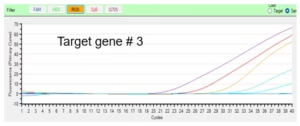
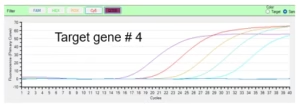
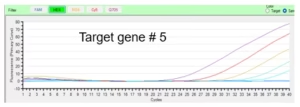
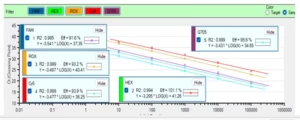
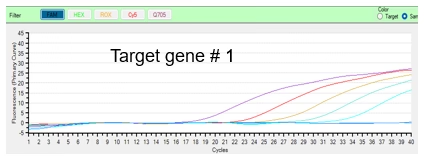
To confirm the suitability of the product DT0701.200 DTI One Step FabScript II RT-qPCR Premix in a 5-target gene multiplex assay.

Results
Conclusion

For all five target genes, the product demonstrated an acceptable R² value > 0.99 and amplification efficiency between 90–100% for serial dilutions of human RNA ranging from 100 ng to 10 pg.

Application Data 2

Objective

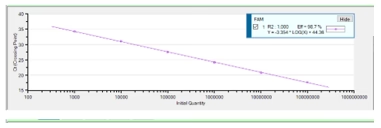
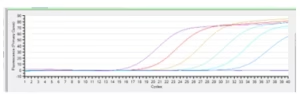
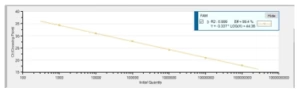
To confirm the stability of the product DT0701.200 DTI One Step FabScript II RT-qPCR Premix over multiple freeze-thaw cycles.

Results
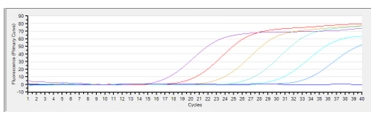
Freeze-thaw 30 cycles


Conclusion
There was no significant difference in the Ct cycles of the product that was subjected to freeze thaw for 30 times product as compared to the sample that wasn’t subjected to freeze thaw cycles is stable for upto 30 cycles of freezing and thawing.